
- 0
- 1,136 word
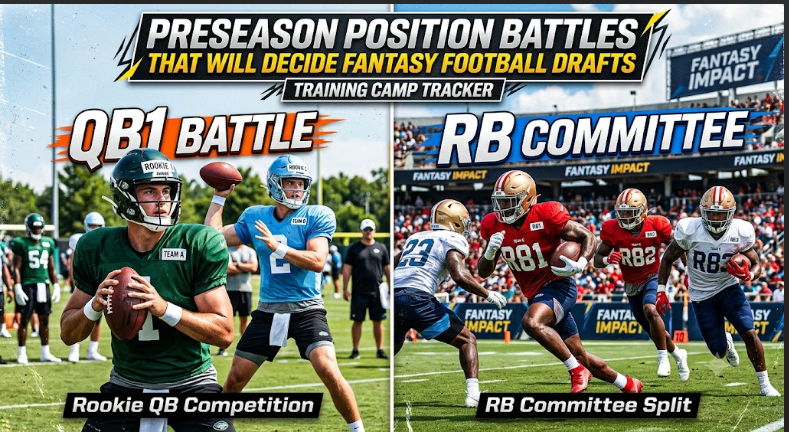
Fantasy football championships aren’t won on draft day—they’re won by identifying value before everyone else does. Every NFL preseason brings exciting position battles that can dramatically change a player’s fantasy value. While many fantasy managers focus on star players, experienced managers closely watch training camp reports, preseason performances, and depth chart updates.
A backup running back who wins a starting role, a rookie wide receiver earning first-team reps, or a quarterback securing the starting job can completely reshape fantasy football draft strategies. These battles often determine which late-round picks become league winners and which early-round selections end up disappointing.
Let’s explore the most important preseason position battles every fantasy football manager should monitor before heading into draft season.
Why Preseason Position Battles Matter
Fantasy football is all about opportunity. Talent matters, but volume and playing time matter even more.
During preseason, NFL coaches evaluate players in live-game situations. This creates opportunities for young stars, rookies, and veterans trying to earn larger roles.
Winning a position battle can mean:
- More offensive snaps
- Increased red-zone opportunities
- Higher target share
- More rushing attempts
- Better fantasy consistency
Ignoring these developments can leave fantasy managers drafting outdated rankings while smarter competitors capitalize on emerging value.
Running Back Battles Usually Create the Biggest Fantasy Winners
No position changes fantasy drafts more than running back.
Many NFL teams now use committee backfields instead of one featured runner. However, preseason often reveals which player is becoming the primary option.
Watch for:
- First-team practice reps
- Goal-line usage
- Third-down responsibilities
- Pass-catching opportunities
- Preseason snap percentage
A running back who earns both rushing and receiving duties instantly becomes much more valuable in PPR leagues.
Fantasy managers should especially monitor younger backs competing against aging veterans, as coaching staffs often prioritize explosive playmakers entering a new season.
Rookie Wide Receivers Fighting for Starting Jobs
Every season introduces talented rookie receivers capable of making immediate fantasy impacts.
Training camp reports often reveal whether these rookies are earning trust from coaching staffs and quarterbacks.
Important indicators include:
- Starting in three-receiver sets
- Chemistry with the starting quarterback
- Red-zone targets
- Deep-ball opportunities
- Route participation percentage
Fantasy football history has shown that rookie receivers can become league-winning picks when they secure meaningful offensive roles early.
Rather than focusing solely on preseason statistics, pay attention to how often they’re playing with the first-team offense.
Quarterback Competitions Affect Entire Fantasy Rosters
Quarterback battles don’t just impact quarterbacks—they influence every offensive weapon on the roster.
A more aggressive passer may increase the fantasy value of wide receivers and tight ends, while a mobile quarterback might reduce passing volume but increase rushing upside.
When evaluating quarterback competitions, monitor:
- Completion percentage
- Decision-making
- Red-zone efficiency
- Offensive tempo
- Chemistry with starters
If a young quarterback wins the job, surrounding receivers often become intriguing late-round fantasy targets.
Tight End Breakouts Often Begin During Preseason
Tight end remains one of fantasy football’s thinnest positions.
Because of that, identifying a breakout candidate before Week 1 provides a major competitive advantage.
Watch for tight ends who:
- Play nearly every offensive snap
- Run routes instead of blocking
- Receive red-zone targets
- Work consistently with starting quarterbacks
Many fantasy breakouts begin quietly during training camp before becoming weekly starters during the regular season.
Offensive Line Battles Matter More Than Most Managers Realize
Fantasy managers often overlook offensive lines.
However, offensive line improvements can dramatically increase production for:
- Running backs
- Quarterbacks
- Goal-line offenses
- Overall scoring efficiency
If a team upgrades multiple offensive line positions, their entire offense may become more fantasy-friendly.
Likewise, injuries or weak offensive line performances during preseason can lower expectations for otherwise talented skill players.
Backup Running Backs Are Worth Watching
Every fantasy season features unexpected injuries.
The managers who already roster valuable backups often gain a significant advantage.
Some backup running backs receive increased preseason workloads because coaches want to evaluate whether they can handle starter responsibilities.
Look for backups who:
- Receive goal-line carries
- Play on passing downs
- Handle two-minute offense
- Work with the first-team unit
Even if they don’t start Week 1, their fantasy value can skyrocket later in the season.
Don’t Overreact to Preseason Statistics
One impressive preseason performance doesn’t guarantee regular-season success.
Instead of chasing box scores, focus on player usage.
Questions to ask include:
- Did the player start the game?
- Was he playing with first-team teammates?
- How many snaps did he receive?
- Was he involved in the passing game?
- Did coaches publicly praise his performance?
These factors usually predict fantasy production better than one long touchdown run against backup defenders.
Training Camp Reports Can Be More Valuable Than Preseason Games
Beat reporters attend every practice and often notice trends before national media.
Pay attention to reports mentioning:
- Increased first-team reps
- Improved chemistry
- Consistent red-zone involvement
- Strong pass protection
- Coaches expressing confidence
Reliable local reporting often provides valuable fantasy football insights several weeks before average fantasy managers notice.
Position Battles That Frequently Produce Sleeper Picks
Several situations repeatedly create fantasy sleepers each year.
Examples include:
- Rookie wide receivers replacing veterans
- Sophomore running backs taking larger roles
- Backup quarterbacks winning starting jobs
- Tight ends becoming full-time starters
- Slot receivers earning more targets
- Goal-line specialists expanding into every-down roles
Recognizing these trends early helps fantasy managers build deeper, more balanced rosters.
Fantasy Draft Strategy Based on Preseason Battles
As draft day approaches, rankings should become more flexible.
Instead of relying solely on preseason rankings published months earlier, adjust based on current information.
A smart strategy includes:
- Draft proven stars early.
- Target rising players in the middle rounds.
- Use late-round picks on players winning preseason battles.
- Avoid crowded depth charts with uncertain workloads.
- Stay updated until your draft begins.
Remember, fantasy drafts held later in preseason usually provide an advantage because more position battles have already been decided.
Common Mistakes Fantasy Managers Make
Many fantasy managers repeat the same preseason mistakes every year.
Avoid these errors:
- Drafting based only on last year’s statistics.
- Ignoring depth chart changes.
- Overvaluing preseason highlight plays.
- Underestimating rookies.
- Forgetting offensive coaching changes.
- Ignoring injury recoveries.
- Drafting backup players without a realistic path to playing time.
Avoiding these mistakes often separates playoff teams from struggling ones.
Final Thoughts
Preseason position battles are one of the biggest factors influencing fantasy football drafts. Every training camp creates new opportunities for players to climb depth charts, earn larger workloads, and become fantasy stars.
The best fantasy managers don’t simply follow rankings—they understand why rankings change. By monitoring running back competitions, quarterback battles, rookie development, offensive line improvements, and coaching decisions, you can identify breakout players before your league notices.
Stay patient, follow reliable training camp reports, and prioritize opportunity over preseason hype. When draft day arrives, you’ll be better prepared to find hidden value, avoid costly mistakes, and build a roster capable of competing for a fantasy football championship.
Author

Freshmediarecord01@gmail.com
Related Posts
What Happens During a Professional Pest Inspection?
- 0
- 1,556 word
Seeing an ant trail, hearing scratching inside a wall, or finding insect wings near a window can leave you wondering how serious...
Read out all
Why Every Marketer Is Secretly Relying on Social Growth Platforms
- 0
- 1,178 word
Building a strong social media presence has become more challenging than ever. Every day, millions of posts compete for attention across Instagram,...
Read out all
How AI and New Supply Chains Are Quietly Changing Our Kitchens
- 0
- 1,209 word
How AI and New Supply Chains Are Quietly Changing Our Kitchens Introduction The modern kitchen is evolving faster than most people realize....
Read out all
Which Hotel Price Tracker Is Actually Worth Using for Business Travel?
- 0
- 1,160 word
Business travel comes with tight schedules, fixed budgets, and constant pressure to keep costs under control. While airlines often receive the most...
Read out all
Where Is the Global Economy Headed? Major Predictions and Market Shifts
- 0
- 1,190 word
The global economy has entered a period of rapid transformation. Inflation, rising interest rates, technological innovation, geopolitical tensions, and changing consumer behavior...
Read out all
How AI and Robotics Are Changing Metal Fabrication in 2026
- 0
- 1,068 word
The metal fabrication industry has always been driven by innovation. From manual welding to CNC machines, every technological advancement has helped manufacturers...
Read out all