
- 0
- 859 words
Keep Your Home and Garden Pest-Free Without Harsh Chemicals
Pests can quickly turn a healthy garden or comfortable home into a frustrating space. While chemical pesticides may offer fast results, they often come with risks to people, pets, beneficial insects, and the environment. Fortunately, natural and organic solutions can effectively reduce pest problems while keeping your surroundings safe.
If you’re looking for eco-friendly ways to protect your plants and home, these proven methods can help you achieve long-lasting results without relying on harmful chemicals.
Why Choose Natural Pest Control?
Natural pest control focuses on preventing and managing pests using environmentally friendly techniques. Instead of eliminating every insect, these methods help maintain a healthy balance in your garden or home ecosystem.
Benefits include:
- Safe for children and pets
- Protects beneficial insects like bees and butterflies
- Reduces chemical exposure
- Improves soil health
- Supports sustainable gardening practices
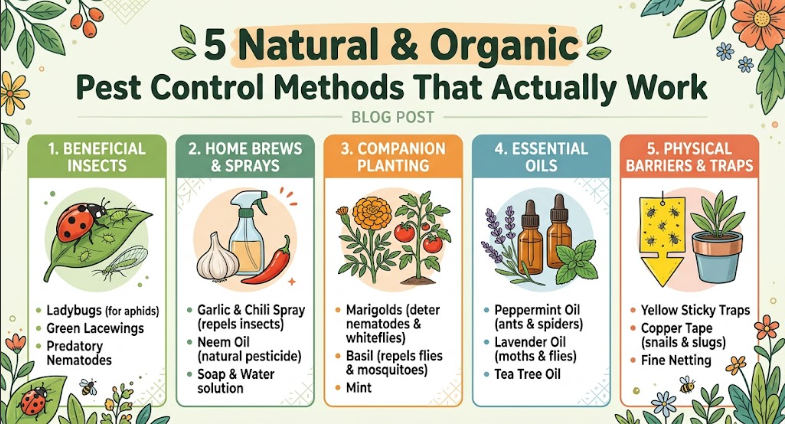
1. Neem Oil Spray
Neem oil is one of the most trusted organic pest control solutions available today. Extracted from the neem tree, it works by disrupting the feeding and reproduction cycle of many insects.
It is effective against:
- Aphids
- Whiteflies
- Spider mites
- Mealybugs
- Scale insects
One of the biggest advantages of pest control using neem oil is that it targets harmful insects while having minimal impact on beneficial pollinators when applied correctly during early morning or evening hours.
How to use:
- Mix 2 teaspoons of neem oil with 1 liter of water.
- Add a few drops of mild liquid soap.
- Spray leaves every 7–10 days.
2. Introduce Beneficial Insects
Not every insect is harmful. Some insects naturally feed on garden pests and help maintain ecological balance.
Helpful insects include:
- Ladybugs (eat aphids)
- Lacewings (control soft-bodied insects)
- Praying mantises (feed on many garden pests)
- Parasitic wasps (target caterpillars and larvae)
Creating a pollinator-friendly garden with flowering plants encourages these natural predators to stay and protect your plants throughout the growing season.
3. Homemade Garlic and Chili Spray
Garlic and chili contain compounds that repel many insects without harming plants.
This inexpensive homemade spray helps keep away:
- Caterpillars
- Beetles
- Aphids
- Ants
Recipe
Ingredients:
- 5 garlic cloves
- 2 hot chilies
- 1 liter water
- A few drops of liquid soap
Blend everything together, strain the mixture, and spray it on affected plants once every week or after rainfall.
Always test the spray on a small section of the plant before full application.
4. Diatomaceous Earth
Food-grade diatomaceous earth is a fine powder made from fossilized algae. It damages the outer coating of crawling insects, causing them to dehydrate naturally.
Works well against:
- Ants
- Fleas
- Slugs
- Earwigs
- Cockroaches
Simply sprinkle a thin layer around plants, garden beds, or pest-prone areas. Reapply after heavy rain for the best results.
Be sure to use food-grade diatomaceous earth rather than pool-grade products.
5. Companion Planting
Companion planting is an age-old gardening technique where certain plants naturally repel pests or attract beneficial insects.
Examples include:
- Marigolds repel nematodes and aphids.
- Basil helps deter mosquitoes and flies.
- Mint discourages ants.
- Lavender repels moths and fleas.
- Nasturtiums attract aphids away from vegetables.
By planting these companions together, you create a healthier garden with fewer pest problems.
Additional Organic Pest Prevention Tips
Natural methods work even better when combined with good gardening habits.
Follow these simple practices:
- Remove dead leaves regularly.
- Avoid overwatering plants.
- Rotate crops every season.
- Inspect plants weekly.
- Keep garden tools clean.
- Encourage birds to visit your garden.
- Use mulch to reduce weeds and pest habitats.
Prevention is often more effective than treating an infestation after it spreads.
Common Mistakes to Avoid
Even natural pest control methods require proper use.
Avoid these common errors:
- Spraying neem oil during hot afternoon sunlight
- Applying too much homemade spray
- Ignoring early signs of infestation
- Using non-food-grade diatomaceous earth
- Removing beneficial insects by mistake
A balanced approach delivers better long-term results.
Conclusion
Natural and organic pest control isn’t just better for the environment—it also helps create healthier gardens and safer homes. Whether you choose neem oil, beneficial insects, homemade sprays, diatomaceous earth, or companion planting, these methods provide reliable protection without exposing your family or plants to harsh chemicals.
The key to success is consistency. Regular monitoring and preventive care can stop small pest issues from becoming major infestations, allowing your garden to thrive naturally.
Frequently Asked Questions (FAQs)
1. What is the best natural pest control method?
Neem oil is widely considered one of the most effective natural pest control methods because it targets many common insects while remaining environmentally friendly.
2. Is organic pest control safe for vegetables?
Yes. Most organic pest control methods, including neem oil, companion planting, and beneficial insects, are safe for vegetable gardens when used correctly.
3. How often should I apply neem oil?
Generally, every 7–10 days or after heavy rainfall. Always follow the manufacturer’s instructions.
4. Does diatomaceous earth harm pets?
Food-grade diatomaceous earth is generally considered safe around pets, but avoid creating airborne dust that could irritate the lungs.
5. Can natural pest control completely eliminate pests?
Natural methods aim to manage pest populations rather than eliminate every insect. Maintaining ecological balance usually produces healthier, more sustainable results.
6. Which plants naturally repel insects?
Marigolds, basil, mint, lavender, rosemary, and nasturtiums are among the best plants for naturally deterring common garden pests.
Author

Freshmediarecord01@gmail.com
Related Posts
What Happens During a Professional Pest Inspection?
- 0
- 1,556 word
Seeing an ant trail, hearing scratching inside a wall, or finding insect wings near a window can leave you wondering how serious...
Read out all
Why Every Marketer Is Secretly Relying on Social Growth Platforms
- 0
- 1,178 word
Building a strong social media presence has become more challenging than ever. Every day, millions of posts compete for attention across Instagram,...
Read out all
How AI and New Supply Chains Are Quietly Changing Our Kitchens
- 0
- 1,209 word
How AI and New Supply Chains Are Quietly Changing Our Kitchens Introduction The modern kitchen is evolving faster than most people realize....
Read out all
Which Hotel Price Tracker Is Actually Worth Using for Business Travel?
- 0
- 1,160 word
Business travel comes with tight schedules, fixed budgets, and constant pressure to keep costs under control. While airlines often receive the most...
Read out all
Preseason Position Battles That Will Decide Fantasy Football Drafts
- 0
- 1,136 word
Fantasy football championships aren’t won on draft day—they’re won by identifying value before everyone else does. Every NFL preseason brings exciting position...
Read out all
Where Is the Global Economy Headed? Major Predictions and Market Shifts
- 0
- 1,190 word
The global economy has entered a period of rapid transformation. Inflation, rising interest rates, technological innovation, geopolitical tensions, and changing consumer behavior...
Read out all