
- 0
- 1,160 word
Business travel comes with tight schedules, fixed budgets, and constant pressure to keep costs under control. While airlines often receive the most attention when companies look for savings, hotel expenses can quickly become one of the largest travel costs. The challenge is that hotel prices change frequently—sometimes multiple times a day—making it difficult to know whether you’re booking at the best possible rate.
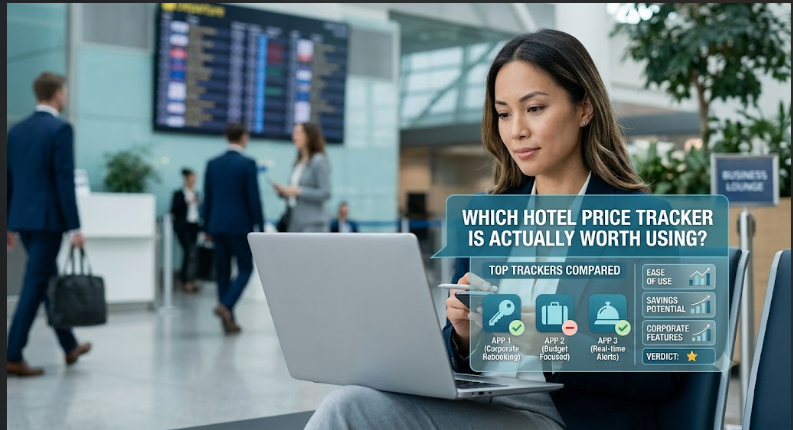
This is where hotel price trackers become valuable. They monitor hotel prices before and after booking, alert travelers when prices drop, and in some cases even help them rebook at a lower rate. But with so many options available, which hotel price tracker is actually worth using for business travel?
In this guide, we’ll compare the leading hotel price tracking tools, explain their strengths and weaknesses, and help you choose the right option for your business travel needs.
Why Hotel Price Tracking Matters for Business Travelers
Unlike leisure travelers, business travelers often have less flexibility. Meetings, conferences, and client visits usually require fixed travel dates, leaving little room to wait for discounts.
A good hotel price tracker can help by:
- Monitoring hotel prices automatically
- Alerting you when rates decrease
- Finding better deals without manual searching
- Reducing overall travel expenses
- Improving compliance with company travel budgets
For companies that book dozens or even hundreds of hotel nights each year, even small savings per stay can significantly reduce annual travel costs.
What Makes a Good Hotel Price Tracker?
Not every hotel booking platform includes effective price tracking. The best tools should offer:
- Real-time price monitoring
- Automatic price alerts
- Flexible cancellation support
- Easy hotel comparisons
- Business-friendly booking options
- Transparent pricing without hidden fees
- Mobile notifications
- Integration with travel management systems
The more automation a tracker offers, the less time travelers spend constantly checking hotel prices.
Top Hotel Price Trackers for Business Travel
1. Google Hotels
Google Hotels has become one of the easiest tools for comparing hotel prices across multiple booking platforms.
Pros
- Free to use
- Excellent price comparison
- Simple interface
- Shows multiple booking websites
- Fast search results
Cons
- Limited post-booking tracking
- Doesn’t automatically rebook cheaper rates
Best for:
Business travelers who want to compare hotel prices before making a reservation.
2. Hopper
Originally known for flight predictions, Hopper now offers hotel price tracking as well.
Pros
- Predicts future price trends
- Sends price alerts
- Mobile-friendly
- Easy booking experience
Cons
- Limited hotel inventory compared to major OTAs
- Prediction accuracy varies by destination
Best for:
Travelers with some flexibility before booking.
3. Kayak Price Alerts
Kayak provides one of the most recognized hotel price alert systems.
Pros
- Tracks hotel prices automatically
- Sends email notifications
- Compares multiple booking sites
- Strong filtering options
Cons
- Mostly helpful before booking
- Doesn’t monitor existing reservations
Best for:
Travel managers comparing hotels across different booking platforms.
4. Expedia
Expedia frequently offers member-only pricing and package discounts.
Pros
- Loyalty rewards
- Frequent discounts
- Wide hotel inventory
- Business travel options
Cons
- Limited true price tracking
- Alerts aren’t as advanced as dedicated tracking tools
Best for:
Companies already using Expedia for travel bookings.
5. Pruvo
Pruvo focuses on one specific problem: reducing hotel costs after you’ve already booked.
Instead of finding hotels initially, it watches refundable reservations and alerts users if the same room becomes available at a lower price.
Pros
- Tracks existing reservations
- Can save money after booking
- Automatic monitoring
- Ideal for refundable bookings
Cons
- Only works with refundable reservations
- Doesn’t help choose hotels initially
Best for:
Frequent business travelers who book refundable hotel rooms.
Comparison Table
| Tool | Best Feature | Price Tracking | Post-Booking Savings | Business Friendly |
|---|---|---|---|---|
| Google Hotels | Price comparison | Yes | No | Excellent |
| Hopper | Price prediction | Yes | No | Good |
| Kayak | Price alerts | Yes | No | Very Good |
| Expedia | Member discounts | Limited | No | Good |
| Pruvo | Reservation monitoring | Yes | Yes | Excellent |
Features Businesses Should Prioritize
When selecting a hotel price tracker for corporate travel, focus on tools that provide measurable value rather than just low prices.
Important features include:
- Automatic price monitoring
- Flexible cancellation support
- Expense reporting
- Corporate travel policies
- Loyalty program integration
- Mobile alerts
- Multi-user management
- Travel analytics
These features help companies reduce costs while maintaining traveler convenience.
Tips to Save Even More on Business Hotels
A hotel price tracker works best when combined with smart booking habits.
Some effective strategies include:
- Book refundable rooms whenever possible.
- Compare prices across multiple booking websites.
- Join hotel loyalty programs.
- Use corporate travel discounts.
- Avoid booking during major local events if schedules allow.
- Set price alerts early.
- Monitor rates until your cancellation deadline.
Even if the price only drops by $20–50 per night, those savings quickly add up over multiple business trips.
Are Free Hotel Price Trackers Enough?
For occasional travelers, free tools like Google Hotels or Kayak often provide enough information.
However, companies with frequent travel schedules may benefit from specialized tools that:
- Track reservations after booking
- Automatically notify travelers of price drops
- Simplify travel expense management
- Integrate with business travel software
The additional automation often outweighs the subscription cost through long-term savings.
Final Verdict
There isn’t a single hotel price tracker that’s perfect for every business traveler.
Your ideal choice depends on how your company books travel:
- Google Hotels is excellent for finding the best initial price.
- Kayak offers reliable price alerts before booking.
- Hopper is useful for travelers who can wait for better rates.
- Expedia works well for businesses invested in its rewards ecosystem.
- Pruvo stands out for companies booking refundable hotels because it continues monitoring prices after the reservation is made.
For most business travelers, combining Google Hotels for research with a post-booking monitoring service like Pruvo provides the best balance of convenience and savings.
Frequently Asked Questions (FAQs)
1. What is a hotel price tracker?
A hotel price tracker is a tool that monitors hotel room rates and notifies users when prices increase or decrease, helping travelers book at the best available rate.
2. Which hotel price tracker is best for business travel?
For pre-booking comparisons, Google Hotels and Kayak are excellent choices. For monitoring refundable reservations after booking, Pruvo is one of the strongest options.
3. Can hotel prices change after booking?
Yes. Hotel rates often fluctuate based on demand, availability, seasonal events, and promotions. If your reservation is refundable, you may be able to cancel and rebook at a lower rate.
4. Are hotel price trackers free?
Many hotel price trackers, including Google Hotels and Kayak, are free. Some advanced services that monitor bookings after reservation may charge a fee or operate on a savings-based model.
5. Do hotel price trackers work internationally?
Yes. Most major hotel price trackers support international destinations and compare prices across global booking platforms.
6. Should companies use hotel price trackers?
Absolutely. Businesses that frequently book travel can reduce accommodation expenses, improve budget control, and save valuable booking time by using reliable hotel price tracking tools.
7. Can a hotel price tracker automatically rebook my reservation?
Some specialized services notify you of price drops, while others can assist with or automate the rebooking process for eligible refundable reservations. This depends on the platform and booking conditions.
Author

Freshmediarecord01@gmail.com
Related Posts

Low-Maintenance Landscaping for Homeowners
- 0
- 1,983 word
A beautiful yard does not have to demand every weekend. With the right plants, layout, irrigation, and materials, homeowners can create an...
Read out all
What Happens During a Professional Pest Inspection?
- 0
- 1,556 word
Seeing an ant trail, hearing scratching inside a wall, or finding insect wings near a window can leave you wondering how serious...
Read out all
Why Every Marketer Is Secretly Relying on Social Growth Platforms
- 0
- 1,178 word
Building a strong social media presence has become more challenging than ever. Every day, millions of posts compete for attention across Instagram,...
Read out all
How AI and New Supply Chains Are Quietly Changing Our Kitchens
- 0
- 1,209 word
How AI and New Supply Chains Are Quietly Changing Our Kitchens Introduction The modern kitchen is evolving faster than most people realize....
Read out all
Preseason Position Battles That Will Decide Fantasy Football Drafts
- 0
- 1,136 word
Fantasy football championships aren’t won on draft day—they’re won by identifying value before everyone else does. Every NFL preseason brings exciting position...
Read out all
Where Is the Global Economy Headed? Major Predictions and Market Shifts
- 0
- 1,190 word
The global economy has entered a period of rapid transformation. Inflation, rising interest rates, technological innovation, geopolitical tensions, and changing consumer behavior...
Read out all